
For centuries, gold has been considered the ultimate symbol of wealth, stability, and financial security. From ancient civilizations to modern central banks, gold has played a dominant role in preserving value during times of uncertainty. However, in today’s rapidly evolving global economy, silver is emerging as the “future gold” for investors—offering a unique blend of affordability, industrial demand, and long-term growth potential.
As technology, renewable energy, and electrification reshape industries worldwide, silver is no longer just a precious metal—it is becoming a strategic asset. This article explores why silver is gaining importance as an investment, how it compares with gold, and why long-term investors are increasingly allocating their portfolios toward silver.
Understanding Silver as an Investment Asset
Silver is a precious metal with dual characteristics: it serves both as a store of value and as an essential industrial commodity. Unlike gold, which is largely held for investment and jewelry, silver is widely used in electronics, solar panels, medical devices, electric vehicles (EVs), and batteries.
This dual nature gives silver a unique advantage—its demand grows not only during financial uncertainty but also during economic expansion.
Key Characteristics of Silver:
- Acts as a hedge against inflation
- Lower price per ounce compared to gold
- Strong industrial and technological demand
- High liquidity in global markets
- Limited natural supply
Silver vs Gold: A Changing Investment Narrative
1. Affordability and Accessibility
One of the most compelling reasons silver is called the future gold is its affordability. Gold prices have surged significantly over the years, making it expensive for small and retail investors. Silver, on the other hand, allows investors to enter the precious metals market at a much lower cost.
This accessibility encourages broader participation, especially among young and first-time investors who are looking to diversify their portfolios without committing large sums.
2. Industrial Demand Is Powering Silver’s Growth
Gold’s demand is primarily driven by jewelry, investment, and central bank reserves. Silver, however, is a critical industrial metal.
Major Industrial Uses of Silver:
- Solar photovoltaic (PV) panels
- Electric vehicles and charging infrastructure
- 5G technology and electronics
- Medical equipment and antimicrobial coatings
- Batteries and semiconductors
With the global push toward renewable energy and green technologies, silver demand is expected to grow exponentially. Solar energy alone consumes a significant amount of silver, and as countries accelerate their clean energy targets, silver consumption is likely to rise further.
This industrial dependency positions silver as a future-oriented metal, unlike gold, which remains largely a traditional safe-haven asset.
Silver as a Hedge Against Inflation and Currency Devaluation
Just like gold, silver protects wealth against:
- Inflation
- Currency depreciation
- Economic instability
- Geopolitical risks
Historically, during periods of high inflation or monetary expansion, silver prices have surged alongside gold. However, silver often outperforms gold in percentage terms during strong bull markets due to its lower base price and higher volatility.
As global debt levels rise and fiat currencies lose purchasing power, investors are increasingly turning toward tangible assets like silver to preserve long-term wealth.
Limited Supply and Growing Deficit
Another critical factor supporting silver’s long-term investment appeal is supply constraints.
- Silver mining production is relatively stagnant
- Most silver is produced as a by-product of mining other metals like copper and zinc
- Industrial consumption is reducing available above-ground silver
Unlike gold, much of the silver used in industrial applications is not recycled, leading to a gradual depletion of accessible supply.
This widening gap between demand and supply may lead to structural price increases, making silver a compelling long-term investment opportunity.
Silver’s Role in the Green Energy Revolution
The transition to renewable energy is one of the most significant economic shifts of our time. Silver plays a non-negotiable role in this transformation.
Why Silver Is Critical for Renewable Energy:
- Best electrical and thermal conductivity among metals
- Essential for high-efficiency solar panels
- Used in energy storage systems
- Key component in EV power systems
As governments worldwide commit trillions of dollars toward decarbonization, silver demand is expected to benefit directly. This makes silver not just a precious metal, but also a strategic resource for the future economy.
Gold-to-Silver Ratio Signals Opportunity
The gold-to-silver ratio measures how many ounces of silver are needed to buy one ounce of gold. Historically, this ratio has averaged between 50:1 and 60:1. However, in recent years, it has often remained much higher.
A high ratio suggests that silver is undervalued compared to gold. When the ratio eventually normalizes, silver prices tend to rise faster than gold—offering higher returns for investors.
Many long-term investors track this ratio closely to identify favorable entry points into silver investments.
Silver as Portfolio Diversification Tool
Diversification is a cornerstone of sound investing, and silver plays an important role in reducing portfolio risk.
Benefits of Adding Silver to Your Portfolio:
- Low correlation with equities
- Protection during market volatility
- Acts as a hedge against systemic risk
- Complements gold and other commodities
In times of financial crisis, silver has often acted as a safe-haven asset, while in economic recoveries, its industrial demand supports price appreciation—offering a balance that few assets can match.
Ways to Invest in Silver
Investors today have multiple options to gain exposure to silver, making it more accessible than ever.
Popular Silver Investment Options:
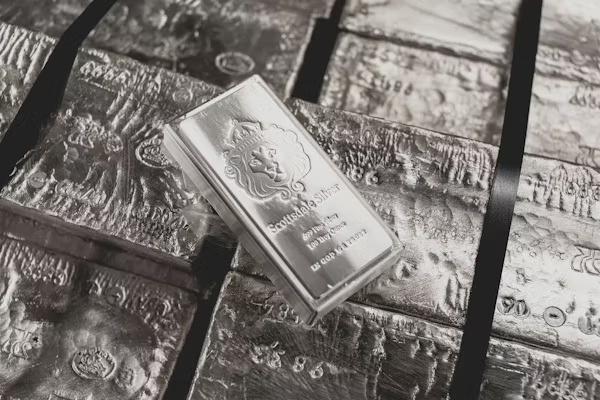
- Physical silver (coins and bars)
- Silver ETFs
- Silver mining stocks
- Digital silver platforms
- Silver futures and options (for advanced investors)
Each option has its own risk-return profile, allowing investors to choose based on their goals, time horizon, and risk appetite.
Risks and Volatility in Silver Investing
While silver offers significant upside potential, it is important to acknowledge its price volatility. Silver prices can fluctuate more sharply than gold due to industrial demand cycles and market sentiment.
However, for long-term investors, this volatility often presents buying opportunities rather than risks—especially when investing systematically or during market corrections.
Why Long-Term Investors Are Bullish on Silver
Silver is no longer just “poor man’s gold.” It is evolving into a future-ready investment asset driven by technology, sustainability, and global economic shifts.
Key Reasons Silver Is the Future Gold:
- Rising industrial and technological demand
- Strong inflation-hedging properties
- Lower entry cost compared to gold
- Supply constraints and growing deficits
- Crucial role in renewable energy and EVs
As the world moves toward electrification and sustainability, silver’s importance is likely to grow significantly—making it a smart long-term addition to an investor’s portfolio.
Conclusion: Is Silver the New Gold?
While gold will always retain its place as a timeless store of value, silver is carving out its own identity as the investment metal of the future. Its combination of monetary and industrial demand gives it a unique edge in a changing global economy.
For investors seeking diversification, inflation protection, and exposure to future growth themes, silver presents a compelling opportunity. In many ways, silver is not replacing gold—but complementing and, in some cases, outperforming it.
As trends in renewable energy, technology, and economic uncertainty continue to unfold, silver’s role in investment portfolios is likely to become more prominent than ever before.